
The house looks almost normal. The floor is dry to touch. Everyone is exhausted and just wants to sleep in their own bed again.
That is the week people move back in, and that is the week the trouble starts.
Before anything else. If you walked through floodwater and you develop fever, bad muscle pain — especially in the calves — red eyes, headache, or you are passing less urine than usual, go to a doctor and tell them you had floodwater contact. Rat fever is treatable early and dangerous late, and the delay is nearly always because somebody assumed it was ordinary viral fever. Follow whatever the Health Department is advising on preventive medication. Do not self-medicate, and do not take anything on a neighbour’s recommendation.
Floodwater is not rainwater
By the time it comes through your door it has passed through septic tanks, drains, waste dumps, cattle sheds and paddy. What it leaves behind is not mud.
That one or two centimetre layer of fine silt on every floor is holding sewage solids, agricultural runoff, often diesel or engine oil, and a bacterial load that survives much longer in damp silt than in open water. Because the silt holds moisture, things stay alive in it after the surface looks dry.
Leptospira is shed in rat urine and survives in wet soil for weeks. That is the entire reason rat fever spikes after Kerala floods. It is a water-and-mud disease, not a bite disease. You get it through a cut on your foot while cleaning.
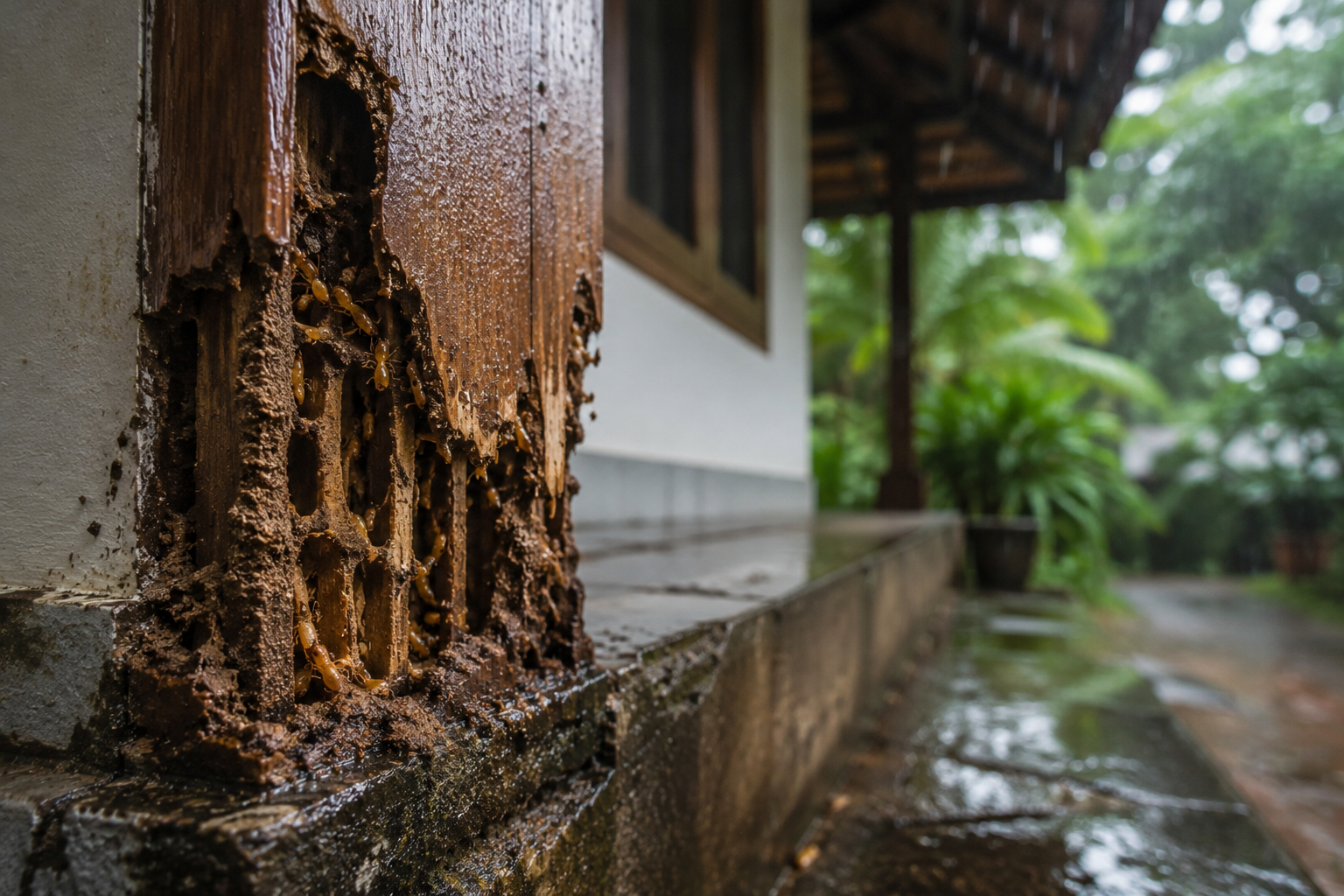
Then there is water inside the structure. Masonry, plaster, wooden frames and plywood absorb it and release it slowly for weeks. That is the black mould that turns up three weeks later, when everyone had decided it was finished.
And if you are on an open well, which a very large number of households in Kerala still are, that well is contaminated by surface inflow. It does not matter that the water looks clear.
Do it in this order
The order is not a suggestion. Disinfectant on top of wet silt does close to nothing, because it cannot reach the surface and the organic matter in the mud neutralises it on contact. People spray first because spraying feels like progress. It is wasted product and wasted money.
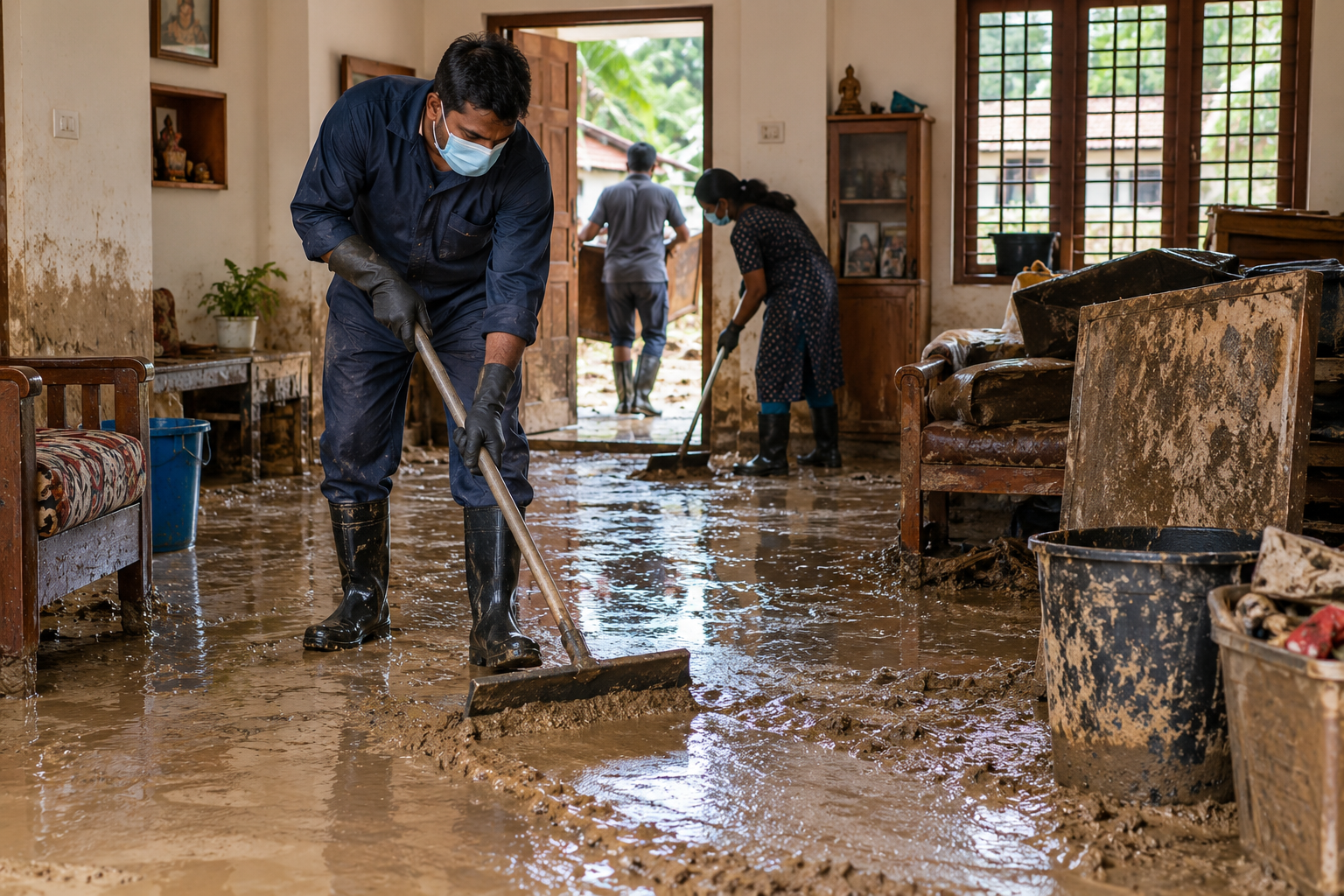
First, before you go in. Leave the main supply off until an electrician has checked the boards and wiring — water inside a conduit does not drain out by itself. Boots, thick gloves, mask. Cover every cut and scratch with waterproof dressing, because an open wound in flood silt is the textbook exposure. Check for structural damage and gas before you start shifting things. And check for snakes, because displaced snakes shelter in cupboards, behind cupboards and in piles of wet cloth, and people find them with their hands. Photograph everything before you move it, for the insurance claim.
Second, get the silt out. Shovel and scrape while it is still damp. Once it hardens it takes three times as long and you will be chipping it off with a spade. Do not wash it into the drain unless you want a blocked line on top of everything else.
Then the hard decision. Anything porous that was soaked and cannot be dried within 48 hours has to go. Mattresses, carpets, sofa cushions, particle board and MDF furniture, cardboard storage, insulation. These cannot be reliably disinfected, and people keep them anyway because throwing out a mattress feels wasteful. Solid wood and steel you can usually save — an old teak wardrobe will survive this, a modular kitchen carcass will not.
Scrub floors and walls to the waterline plus about a foot above, with detergent and clean water. This is cleaning, not disinfecting. You are removing the organic load so the disinfectant has something to work with.
Third, dry it. This is the step that gets skipped and it is the one that costs the most later.
Open everything. Cross-ventilate. Run fans continuously. Take off the skirting and lift damaged floor coverings so trapped water can escape. If it is a large house, or one that floods every year, hiring industrial dehumidifiers is money well spent.
You want to be dry within 48 to 72 hours. Past that, mould colonisation is close to certain, and mould is a harder and costlier problem than the flood was.
Fourth, now disinfect. Surfaces should be visibly clean and as dry as you can get them.
Floors, tiled walls and bathrooms take a sodium hypochlorite solution at whatever concentration the label specifies, left for the full contact time — usually around ten minutes, not a quick wipe. Kitchen and food-contact surfaces need a food-safe product and a clean water rinse afterwards. Furniture and fittings get wiped down. For whole rooms, ULV cold fogging reaches ceiling voids and corners that no amount of hand cleaning gets to.
Two mistakes, both very common. Using disinfectant stronger than the label says, which damages surfaces and does not kill anything faster. And wiping it off immediately, which defeats the entire mechanism, because contact time is the mechanism.
Fifth, the water source. An open well needs chlorination before anybody drinks or cooks with it — super-chlorination and then the standard waiting period. Contact your Health Inspector or the Panchayat health wing. Bleaching powder for well disinfection is normally distributed through the local body after a flood, and they will work out the dose for your well’s volume. Do not estimate it yourself.
Until that is done and the water is tested, boil everything, including the water you cook with.
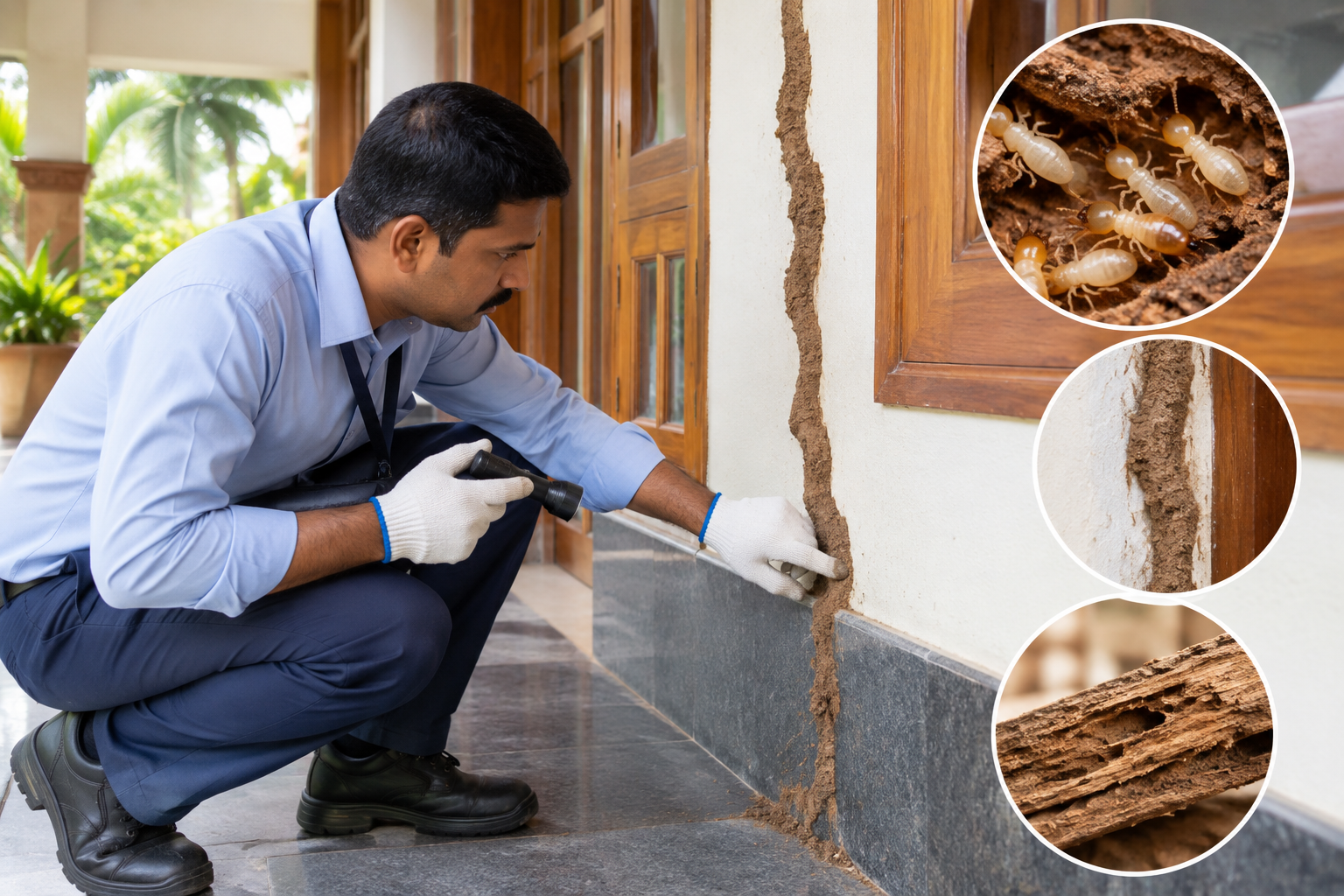
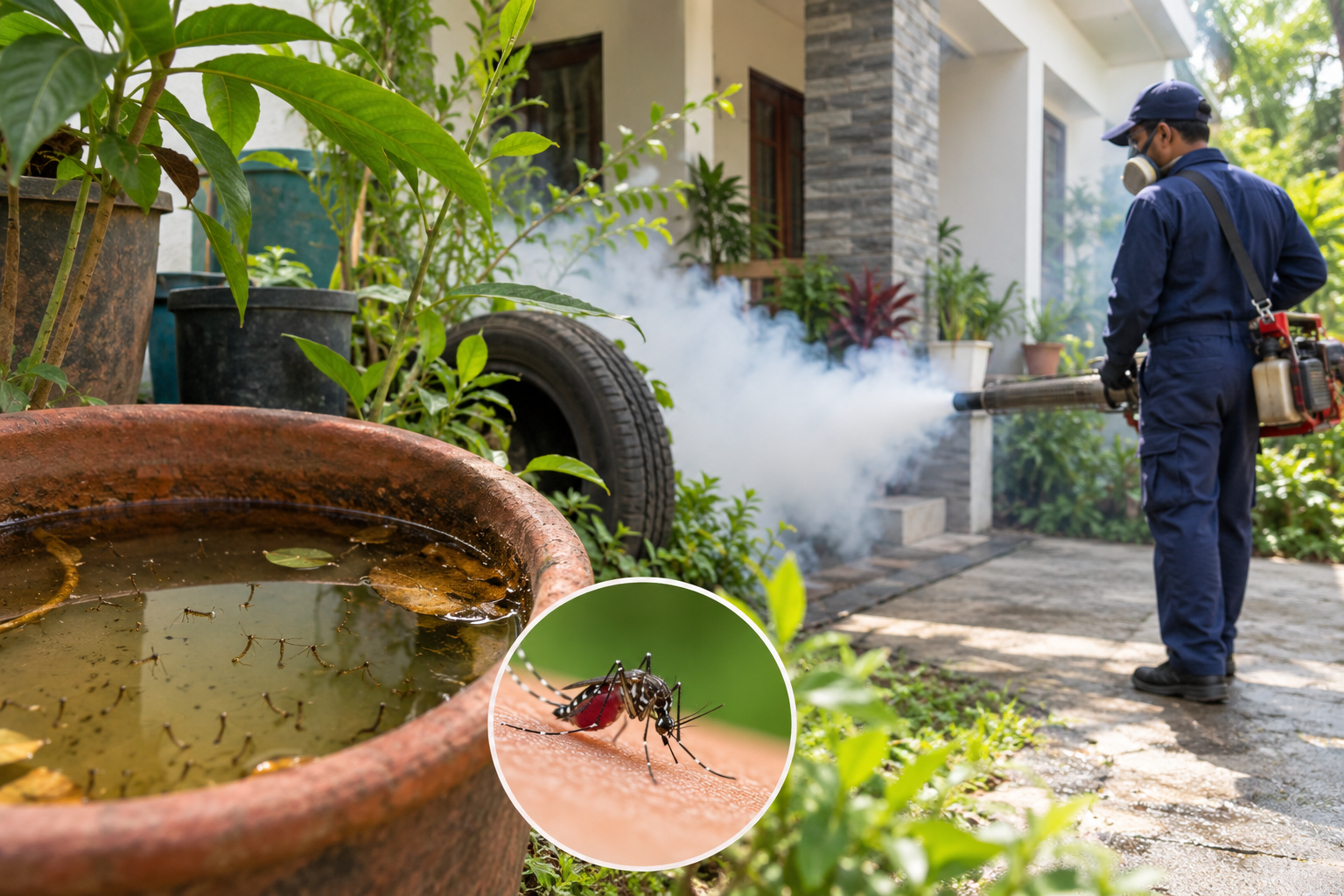
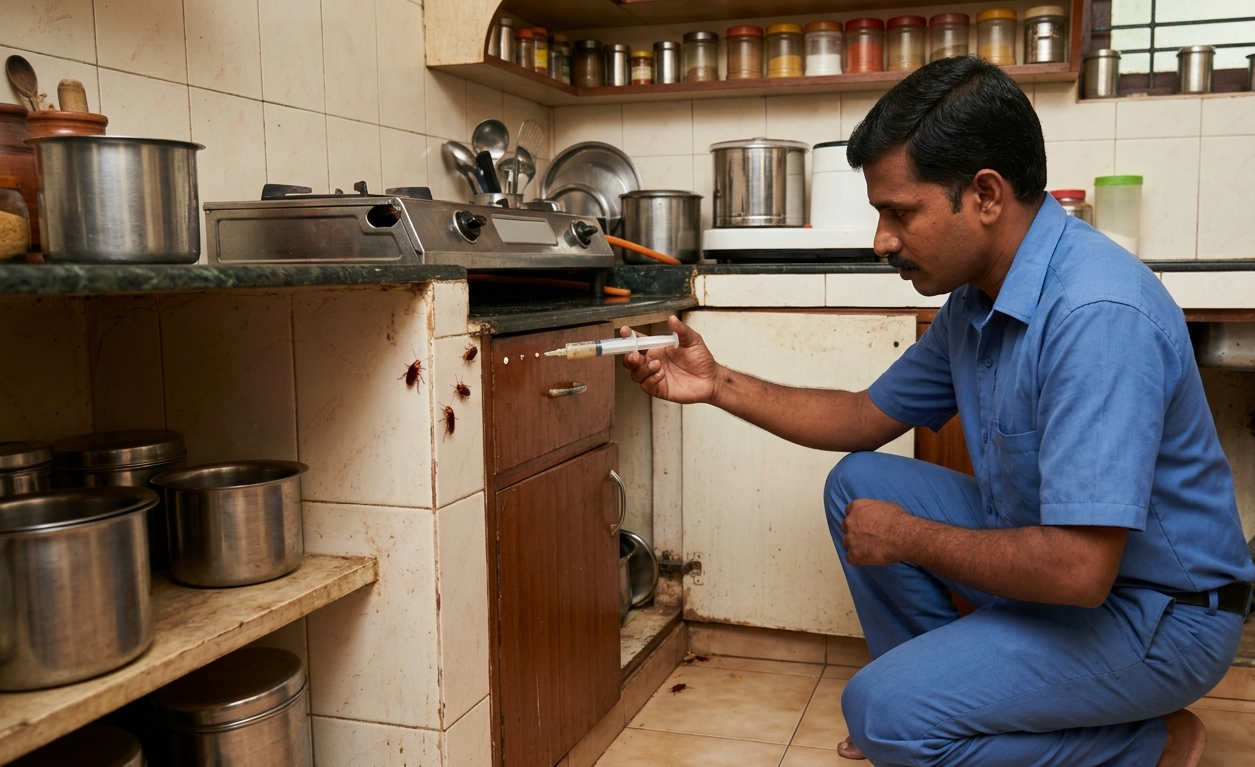
Sixth, pests. This comes last and it is not an upsell. Three things happen after every flood, without exception.
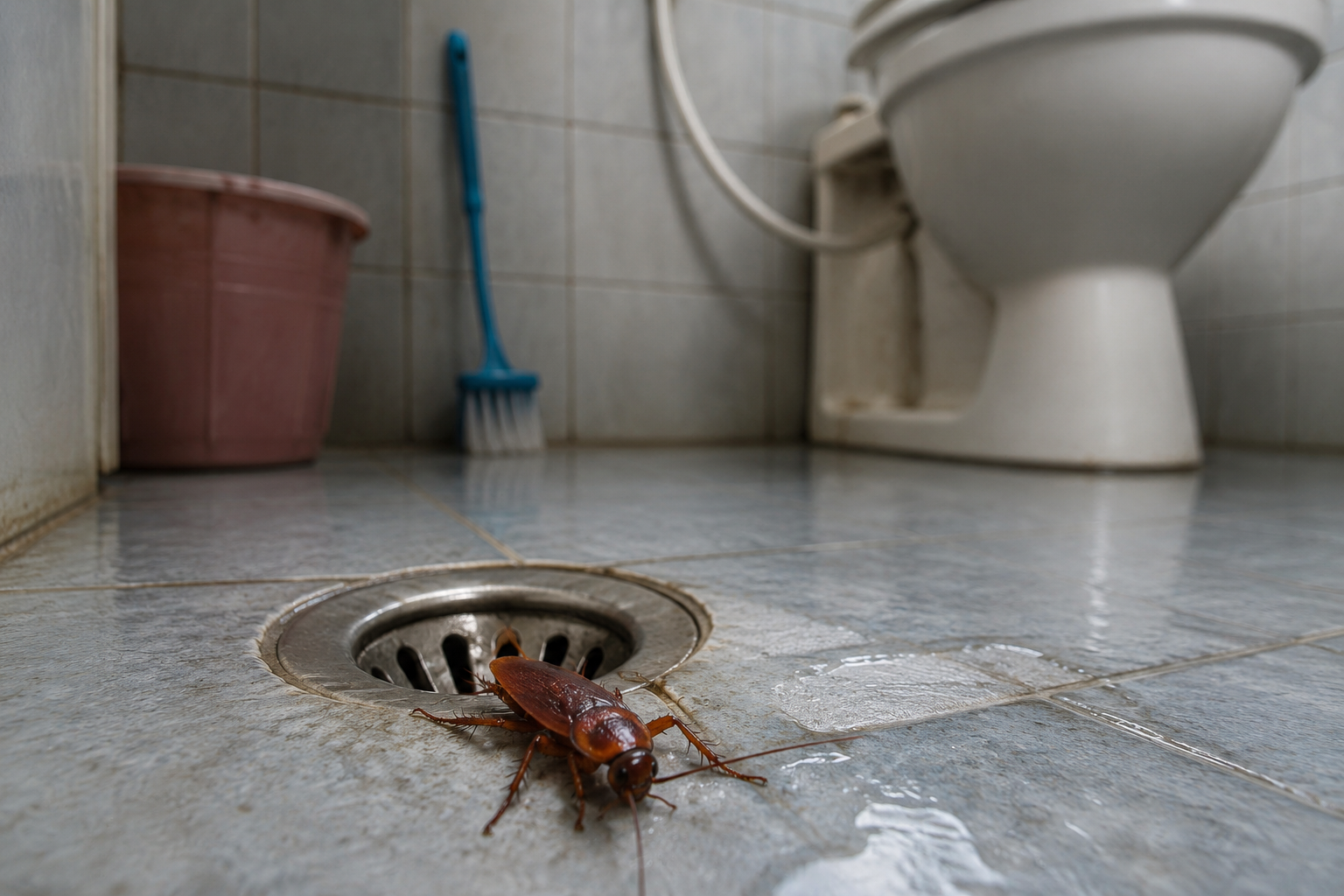
Rats move indoors because their burrows flooded, and they bring the leptospirosis risk into the house with them. Mosquito breeding goes vertical, because the receding water leaves thousands of small containers full. And cockroaches get displaced up out of the damaged, silted drains into the building.
Deal with all three inside the first two weeks. That is the point where reinfestation either happens or does not.
What we do
Our post-flood work runs the whole sequence as one job. Assessment and a written contamination report. Mechanical silt and debris removal with disposal. High-pressure washing of floors, walls and compound. Structural drying with fans and dehumidifiers, moisture readings recorded as we go. Surface disinfection plus ULV fogging throughout. Well and tank cleaning, coordinated with your local health office. Then the rodent, mosquito and cockroach work. Mould treatment where it has already started. And a completion report you can keep for insurance or for an institutional record.
We prioritise houses with elderly people, infants, or anybody immunocompromised.
If you are in an affected area and you cannot afford us right now, call anyway. We will talk you through the sequence on the phone for free, because doing it yourself in the right order beats doing it in the wrong order with help.
📞 Tel: 0471-2353735 | Mobile: 81138 50599 — call or WhatsApp. We respond across Thiruvananthapuram, Kollam, Pathanamthitta, Alappuzha, Kottayam and Ernakulam.
Questions people ask
How soon after the water goes? Silt removal as soon as it is safe to walk in. Drying starts immediately and you want to be dry within 48 to 72 hours. Disinfection once surfaces are clean and dry. The whole thing done inside about a week.
Can I just spray disinfectant and skip the cleaning? No, and this is the most wasteful mistake people make. Organic matter in flood silt inactivates chlorine-based disinfectant the moment it touches it. Without removing the silt and detergent-cleaning first, you are spraying expensive water.
Is bleaching powder enough for my well? Chlorination is the standard method, but the dose depends on your well’s water volume and there is a waiting period before the water can be used. Get the dose from your Health Inspector or Panchayat health wing rather than guessing. Boil drinking water until it is done.
What can I keep? Solid wood, metal, hard plastic — clean, dry and disinfect those. Mattresses, upholstered cushions, carpets, particle board and MDF pull contaminated water into a structure you cannot get disinfectant into. Those go.
When will the mould appear? Two to three weeks after the flood, once everything feels normal again. That delay is exactly why drying gets skipped. If you see dark patches spreading or there is a musty smell weeks later, sort it out before you repaint. Painting over mould traps it and it comes back through the new paint within months.
PCCS India — post-flood cleaning, sanitization and disinfection for homes, shops and institutions across Kerala.