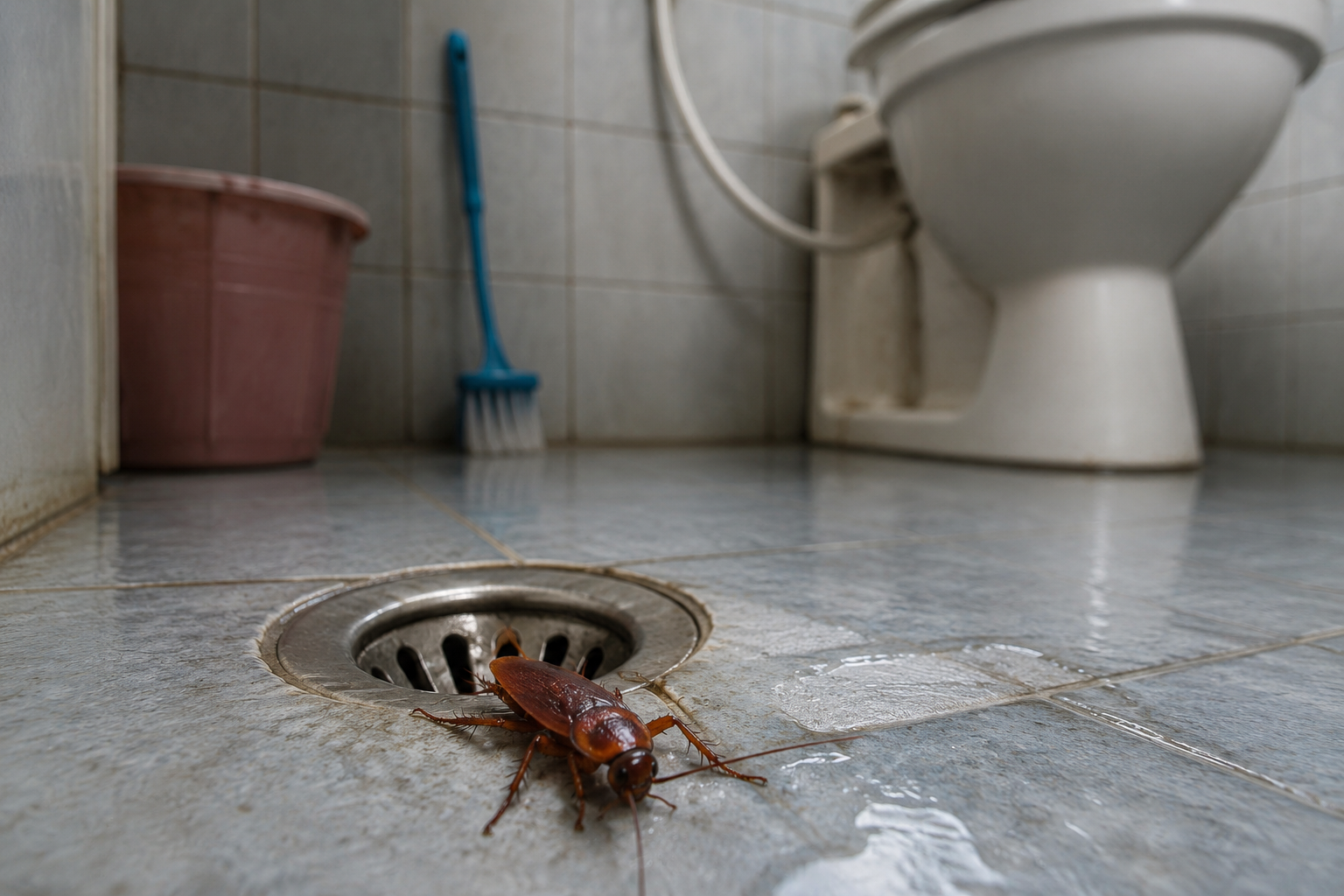

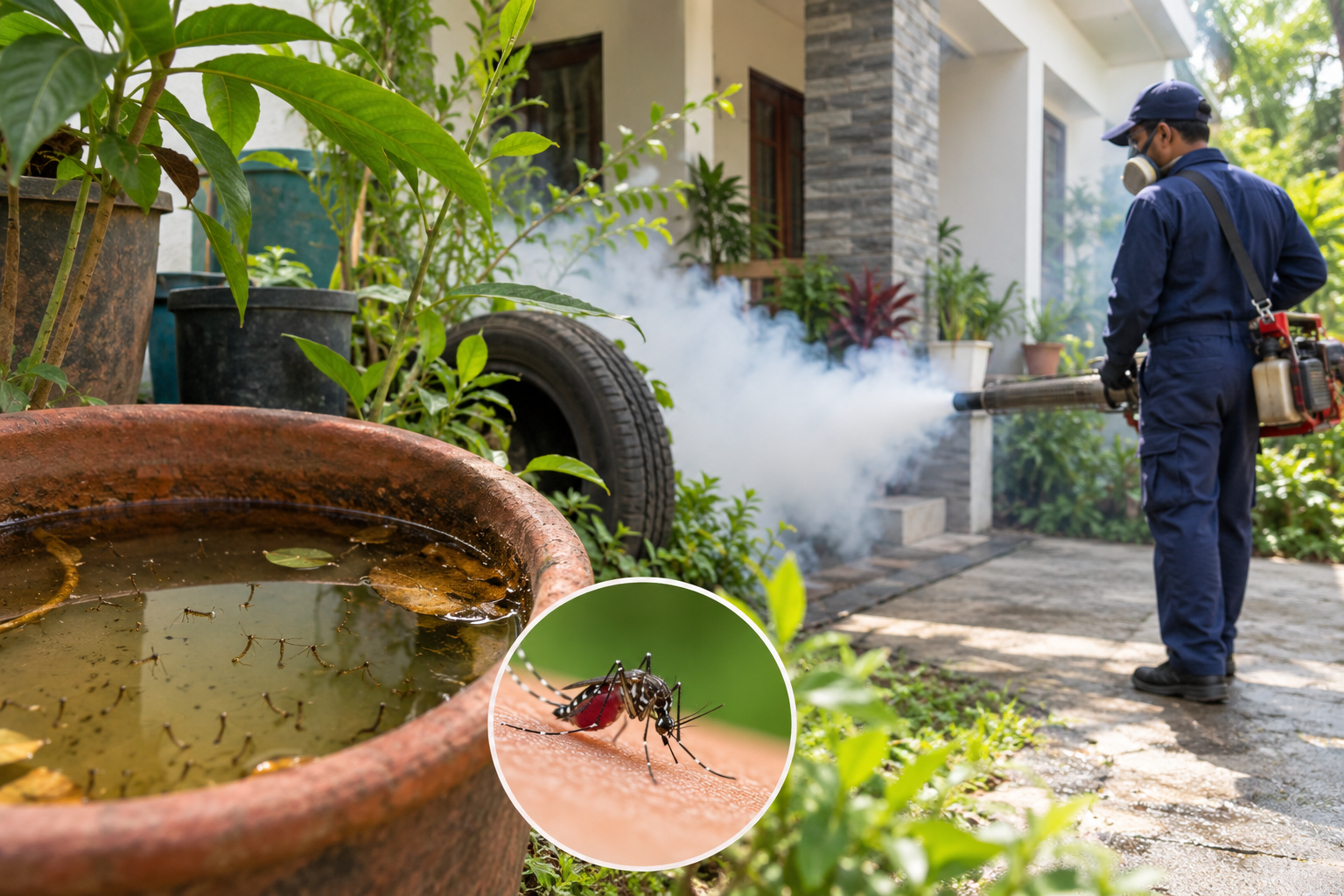
Somebody comes with a machine, the road fills with white smoke, and for one evening there are no mosquitoes. Everybody feels looked after.
Four days later they are back, and nobody connects the two things.
Fogging kills the adult mosquitoes flying at the moment the fog is applied. That is all it does. There is no residual effect, the droplets settle within an hour or two. It does not penetrate water, so it does not touch a single larva or egg. And it does not reach the shaded, sheltered places where Aedes actually rests during the day.
It has a real use, which I will come to. But sold as a standalone monthly mosquito service, it is a subscription to a few hours of relief.
Where we are
Kerala recorded 3,565 confirmed and 10,428 probable dengue cases in 2026 as of mid-June, with more than half the confirmed ones falling from May onwards. DENV-2 was the dominant strain, with the other three serotypes also circulating.
Chikungunya followed the same curve — 105 confirmed and 62 probable cases by early August, and the majority of those were in Thiruvananthapuram district. Meaning our district specifically, not Kerala generally.
The same two mosquitoes carry both: Aedes aegypti and Aedes albopictus. (Check the current numbers before repeating them anywhere. These were accurate in August 2026 and they move every week.)
The thing most people have backwards
Aedes breeds in clean water.
Not the drain. Not the sewage. Not the canal behind the house. Clean water, in small artificial containers, close to where people live.
This single misconception wrecks more household mosquito control here than anything else. People clean the drain thoroughly, feel virtuous about it, and ignore the saucer under the money plant — and the saucer under the money plant is where the dengue mosquito is breeding.
Walk through your own house. Plant pot saucers, and the water sitting in the rim of the pot. The fridge drip tray. Uncovered overhead tanks and sumps. The roof gutter holding water because it is blocked. Tyres, coconut shells, tins and broken pots lying in the compound. The AC drain water. Buckets and drums stored uncovered. Ornamental features and bird baths nobody has touched in a year. Bottle caps. The gap in the well cover. Bamboo stumps and tree holes. And the lucky bamboo container on the windowsill, inside the house.
An egg needs about a bottle cap of water. And here is the part that undoes most people’s effort — Aedes eggs are laid on the container wall just above the waterline and they survive dry for months. Emptying a container once achieves nothing. You have to scrub the inside wall, or you are only giving the eggs a rest.
Work from northern Kerala found Aedes breeding in over forty percent of houses surveyed, with an average of more than sixty breeding sites per hundred houses in the run-up to a dengue peak. Breeding is not unusual here. It is the default state of an unmanaged compound during the monsoon.
Two more things that should change how you behave:
It bites in the daytime. Early morning and late afternoon are the peaks. A mosquito net over the bed protects you from Culex, which is merely annoying, rather than from Aedes, which is what puts people in hospital.
It does not fly far. Typical range is a hundred to two hundred metres. So if you are being bitten, the breeding site is on your property or your immediate neighbour’s. Which is genuinely good news, because it is within reach.
What works, in order
Source reduction first. Weekly, not monthly, because egg to adult runs about seven to ten days at our monsoon temperatures. Empty every container and scrub the inner walls. Turn over buckets and unused vessels. Clear the gutters. Change the water in vases, plant pots and pet bowls, scrubbing each time. Cover tanks, sumps and wells with something that actually fits. Fill or drain the low spots in the compound where water sits after rain. Get rid of the tyres, coconut shells and construction debris.
Unglamorous, free, and by a distance the most effective thing available to a household. The Dry Day drives that the Health Department and local health workers run are built on exactly this, and they work when people actually do them.
Then larvicide whatever you cannot empty. Overhead tanks, wells, ornamental ponds, permanent drains, water-filled construction pits. Products are chosen for the container’s use — water meant for drinking needs something specifically approved for it, and general larvicides must never go into a drinking water source. Bti works well in our conditions and is specific to mosquito larvae. Larvivorous fish are excellent in ponds and disused wells, and guppies do the job perfectly well.
Then residual treatment on resting surfaces. Aedes rests in the daytime on shaded vertical surfaces — under furniture, behind curtains, dark corners, shaded exterior walls, the vegetation under the sit-out. Residual product on those kills mosquitoes over weeks rather than hours. This is the part of a professional treatment that has actual duration.
Then exclusion. Mesh on windows and ventilators, gaps sealed, door closers. Basic, permanent, constantly neglected.
Then fogging, last. Rapid adult knockdown during an active outbreak, or before a function. Useful in that role. Not a programme.
What we do
The breeding site survey first — a physical walk of your property and a written, marked list of every site we find. You get that document. It is usually the most useful thing we leave behind.
Then source reduction where we can do it on the spot, larviciding of anything retained, residual treatment on indoor and outdoor resting surfaces, an exclusion assessment, and ULV fogging where there is an active outbreak that justifies it. Then scheduled follow-ups through the monsoon.
For flat blocks, gated communities, hostels, schools and hospitals we run it at community scale, which, given a two hundred metre flight range, is really the only scale at which mosquito control means much. If you are on a residents’ association committee, this is the single most useful thing you can put on the agenda before the rains start.
And I will not tell you treatment prevents dengue, because it does not. It reduces vector density and removes breeding sites. That is a meaningful contribution to risk and it is not a guarantee. If anybody at home gets high fever, severe headache, joint pain, a rash, or any bleeding, go to a doctor immediately. Delay is what turns dengue into severe dengue.
📞 Tel: 0471-2353735 | Mobile: 81138 50599 — the breeding site survey is free.
Questions people ask
Does fogging prevent dengue? It reduces adult numbers for a few hours. It does not touch eggs or larvae and gives no lasting protection. Source reduction and larviciding are what move the needle.
Where exactly are they breeding in my house? Small containers of clean water. Plant saucers, fridge drip tray, uncovered tanks, blocked gutters, tyres, coconut shells, AC drain water, indoor plant containers. Dirty drains are Culex habitat, which is a different mosquito and a different problem.
Why am I bitten in the afternoon? Because the dengue and chikungunya mosquitoes are day biters, most active early morning and late afternoon. Bed nets do not help against them.
How often during the monsoon? Household source reduction weekly. Professional treatment usually monthly through the season, or whatever the survey suggests. Institutions in high-incidence wards need it tighter.
Safe with children, pets and fish? Registered products, label rates, licensed applicators. Cover the aquarium and switch off the air pump. Keep children and pets out of treated rooms for the re-entry interval we give you. Tell us in advance about infants, pregnancy, asthma or pets.
My neighbours do nothing. Is treating my house pointless? Not pointless, but limited. Their breeding sites are well within flight range of your house. Individual treatment helps. Getting the lane or the association to do it together is several times better. It is worth having the conversation, awkward as it is.
PCCS India — mosquito control and vector management for homes, flats, schools, hospitals and residents’ associations across Kerala.